
Upgrading to Implant-Supported Bridges: A Long-Term Option for Replacing Missing Teeth in Pasadena
Blog:Upgrading to Implant-Supported Bridges: A Long-Term Option for Replacing Missing Teeth in Pasadena
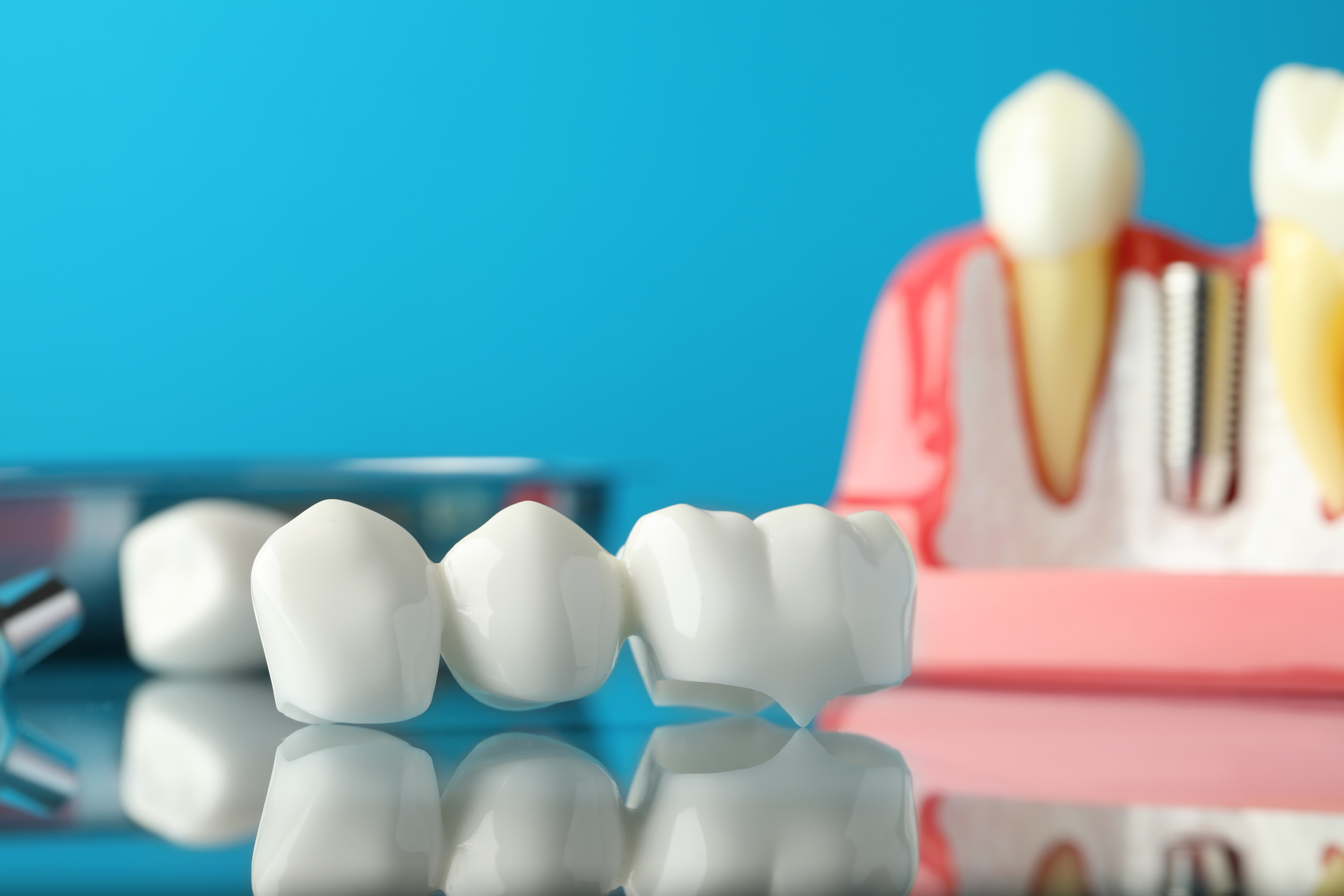
A gap in your smile changes more than your appearance. It can alter how you chew or speak. Over time, neighboring teeth may shift toward the space, and the bone in the area can shrink after a tooth is lost.
Traditional bridges have handled this problem for decades. For many people, they work well. But for patients missing several teeth in a row, there is a newer option.
That option is an implant-supported bridge. It looks like a traditional bridge, but where it draws its strength from is entirely different.
How a Traditional Bridge Works
A conventional bridge rests on the teeth on either side of the gap. Those neighboring teeth get reshaped, and crowns go over them. The artificial teeth in the middle are suspended between those crowns, much like a bridge between two piers.
That design carries one built-in cost. Healthy natural teeth have to be ground down to make room. Once that enamel is gone, it does not come back.
Chewing forces also spread across those abutment teeth. They end up carrying the load for themselves and for the teeth that are no longer there.
For someone missing one or two teeth with strong neighbors on both sides, a traditional bridge is a sound, proven choice.
What an Implant-Supported Bridge Changes
Now picture the same gap, but with nothing resting on the neighboring teeth at all.
Instead, implants, commonly made of titanium, are placed in the jawbone to support the bridge. Bone bonds with the implants during healing, a process called osseointegration. This often takes several months, and the bridge is attached when the implants are ready.
The healthy teeth on either side stay untouched. No grinding, and no crowns unless those teeth need them for other reasons.
Something else changes too, and it does not show up in the mirror. Those implants transfer chewing force down into the jaw, much like natural roots once did. That stimulation helps hold bone density over time.
A traditional bridge sits above the gum and does nothing for the bone underneath. When teeth are lost, the jaw begins to remodel and shrink. A bridge does not stop that process. Implants appear to slow it.
What the Process Looks Like
Expect several visits and a wait in between.
Before surgery, your dentist reviews your health, examines your mouth, and evaluates the bone with appropriate imaging. If implants are suitable, a dentist, periodontist, or oral surgeon places them using anesthesia appropriate to your needs. Healing and follow-up visits come next.
Once the implants have fused with bone, the restorative work starts. Your dentist takes impressions with small connector posts in place. The lab builds the final bridge. A later visit attaches it, either cemented or screwed into position.
Treatment commonly takes several months and can take longer if extractions, grafting, or additional healing are needed. Selected patients may qualify for a faster approach, but your dentist will recommend timing based on the individual case.
Who This Suits
Implant-supported bridges tend to fit a specific set of circumstances.
You are missing several teeth in a row, your neighboring teeth are healthy, and you would rather not reshape them. Your jaw needs sufficient bone to support the planned implants, and your overall health and gum health matter too. Your dentist will assess the number and position of implants needed.
Bone loss is the main obstacle. Patients with significant resorption may need grafting first. That adds time and cost.
Active gum disease needs treatment before either type of bridge. Healthy gums are the foundation for success.
Smoking affects healing and long-term outcomes for both approaches. It matters even more with implants.
Comparing the Trade-offs
Traditional bridges are faster. Two appointments and a couple of weeks usually cover it. They also tend to cost less up front.
Implant-supported bridges usually take longer and cost more initially. They can offer durable support, help maintain bone around the implants, and avoid reshaping neighboring teeth. Longevity and maintenance needs vary; no type of bridge is guaranteed to last for life.
Neither option lasts forever. A bridge, even one called permanent, can wear out or need replacing. An implant can fail. Both need good hygiene and regular dental visits.
Caring for the Bridge
Cleaning differs between the two.
A traditional bridge requires floss threaders or small interdental brushes to reach underneath the artificial tooth. Plaque that gets trapped there causes gum inflammation and decay in the abutment teeth.
An implant-supported bridge also needs daily cleaning around the implants and underneath the artificial teeth. Ordinary flossing alone may not reach every area. Ask your dental team to demonstrate suitable floss threaders, interdental brushes, or other cleaning aids for your bridge.
For either type, you should skip ice, hard candy, and pens. Those habits break teeth and bridges alike.
The Decision
You do not have to choose between the two on your own. A dentist will look at how many teeth are missing, the state of your neighboring teeth, the bone in your jaw, and your timeline.
What is worth knowing before that appointment is this. The old assumption that a bridge must hang from natural teeth is no longer the only path. For Pasadena patients missing several teeth in a row, an implant-supported bridge can replace them without touching the healthy teeth beside them.
That is a meaningful change, and it is worth asking about.
For more on implant-supported bridges, visit Maria Lobodzinski DDS. Our office is in Pasadena, California. Call (626) 844-7490 to book an appointment today.
Quick Links
Helpful Articles

All Dental Services
I offer a wide variety of dental services to the Pasadena community. Contact me with any questions about our services.


Quick Links
Our Services
Contact Info
- 175 South El Molino Ave. Suite #7
Pasadena, CA 91101 - Phone: (626) 844-7490
- Fax: (626) 314-2045
Hours of Operation
- Monday 11:00am - 8:00pm
- Tuesday Closed
- Wednesday 11:00am - 8:00pm
- Thursday Closed
- Friday 11:00am - 8:00pm
- Saturday Closed
- Sunday Closed
- Please contact me for extended hours
For Dental Emergencies, Call Anytime
- Monday
- Tuesday
- Wednesday
- Thursday
- Friday
- Saturday
- Sunday
- Monday
- Tuesday
- Wednesday
- Thursday
- Friday
- Saturday
- Sunday
© 2026 Maria Lobodzinski DDS. All rights Reserved - Accessibility Statement - Privacy Policy - Sitemap
Managed and Designed by 